Pool of Experts

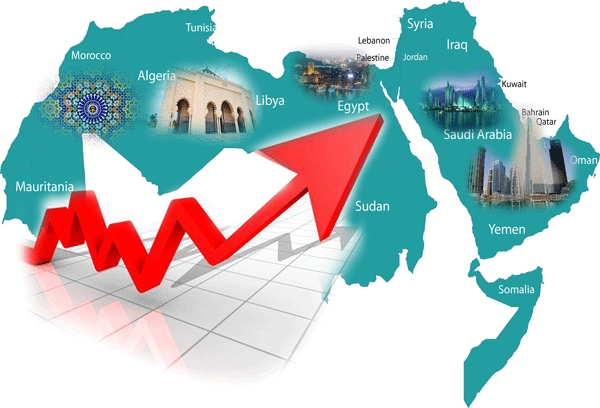
The Pool of Experts is a global multi-disciplinary network of professionals who can provide Local Governments as well as private companies and businessmen with necessary support and expertise when developing their projects. The variety of countries and the different sectors requires a wide range of expertise and skill sets from many different themes and sectors to help outline the strategic direction, offer specific technical support, guide organizational improvements (process and structure), as well as provide financial advice or build capacity to develop bankable project concepts. This includes all sort of economic sectors: industry, energy and renewable energy, transport, construction, infrastructure, urban planning, health, food and cosmetic, Islamic economy...etc as well as expert in doing business and business culture.
Join the pool of Experts
The invitation to join the Pool of Experts is extended to professionals with a proven track record. These may include experts from research and academia, the business sector, non-governmental organizations, financing institutions, as well as local, sub-national and national governments (contact: contact@saentrepreneurs.ch).
List of experts
{mprestriction ids="1"}
{loadmoduleid 1044}
Egypt
Dr. Farouk El-Baz
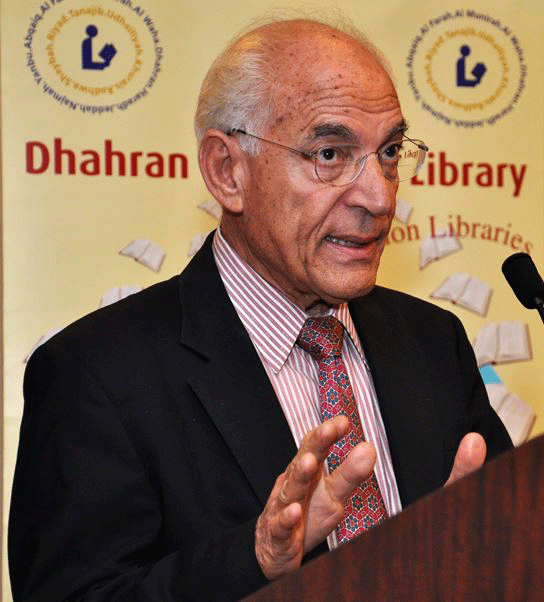
Dr. Farouk El-Baz is Director of the Center for Remote Sensing at Boston University, and member of the U.S. National Academy of Engineering, Arab Academy of Sciences and Islamic World Academy of Sciences. He served as Science Adviser to the late President Anwar Sadat of Egypt, and member of the Higher Council of Science and Technology in both Egypt and Jordan.
Languages: English
Mr. Christian Watts
Regional Director AAA (Americas, Africa, Arabia) at Switzerland Global Enterprise (Switzerland)
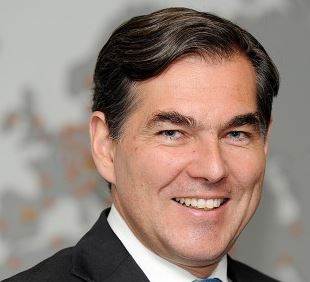
Languages: English (Native or bilingual proficiency), German (Native or bilingual proficiency), French (professional working proficiency), Spanich (limited working proficiency), Arabic (Elementary proficiency).
Mr. Büchi Ruedi
Senior Consultant Middle East at Switzerland Global Enterprise (Switzerland)
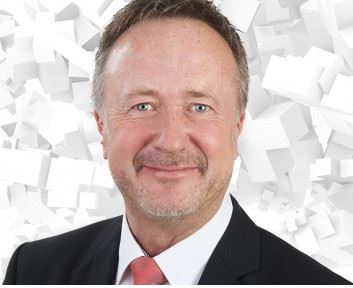
Languages: English, French, German.
Mr. Suhail El Obeid
Senior Consultant, Africa, Middle East, Iran & Turkey at Switzerland Global Enterprise (Switzerland)
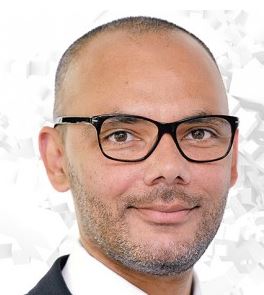
Languages: English, German, French, Arabic.
Mr. Andreas schliessler (Areas of Expertise: Transport)

Andreas Schliessler is a Lead Transport Specialist based in Cairo since mid-2013 with 30 years of international work experience.
He started his career in an international freight forwarding company based in Germany, but quickly moved on to work as a consultant specializing in transport infrastructure planning and transport project development.
His numerous assignments took him to more than 40 countries, mostly in Latin America, Africa and Europe.
In the early 1990’s, while working with the UN Economic Commission for Latin America and the Caribbean, he started working on the development of new approaches for Road Network Management and Maintenance.
In 1996, Andreas Schliessler joined the World Bank, working mostly as a Task Team Leader for transport projects in Africa, Latin America, the Middle East and Eastern Europe.
In addition, he has been the driving force behind the development of the World Bank’s Sample Bidding Document for PMMR - Performance-based Management and Maintenance of Roads (2002) and then for OPRC - Output- and Performance-based Road Contracts (2006).
Prior to joining the World Bank’s Cairo office, he was a Program Team Leader for Transport projects in Russia, Belarus, Ukraine and Moldova.
Languages: English, French, Spanish, German, Portuguese
Mr. Ahmed Kouchouk
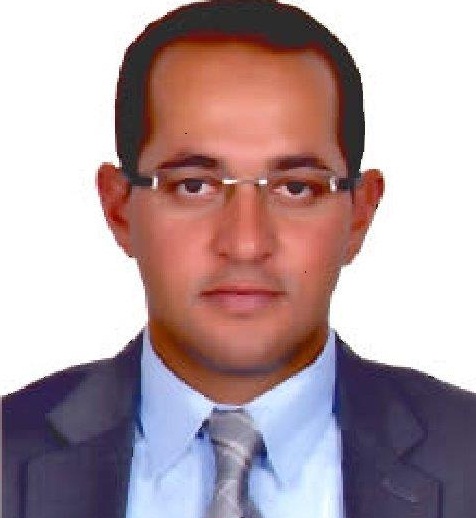
Ahmed Kouchouk joined the World Bank in June 2013 as a Senior Economist based in Cairo.
Mr. Kouchouk, an Egyptian national, is a professional economist and policy advisor with more than 13 years of applied experience. He is currently responsible at the Bank for monitoring and reviewing Egypt’s macroeconomic stance and developments, assessing economic policies adopted and their implications and engaging with the Government on requested technical assistance and advisory services in the macro-fiscal domain.
Before assuming his current post, Mr. Kouchouk was Economic Advisor to the Minster of Finance and the Director of the Macro Fiscal Unit - a leading advisory unit at the Ministry of Finance- (2012 to mid-2013), the executive manager of the Macro Fiscal policy Unit (2007-2008)/ (2010-2012), Economist at the Minister of Finance technical office (2004-2007), and Economic Analyst at the Ministry of Foreign Trade (2002-2004).
During his professional path, Mr. Kouchouk represented the government of Egypt in a number of international venues such the Deauville Partnership and the International Monetary and Financial Committee, the advisory body responsible for suggesting strategic reforms to enhance the work/role of the International Monetary Fund (IMF).
Mr. Kouchouk has a master degree in Public Policy from Harvard Kennedy School of Government, a master degree in economics from York University in the United Kingdom, and a B.S. in economics in 1999 from the American University in Cairo. Mr. Kouchouk wrote and co-authored several research studies, policy papers, and analytical reports that were published by the Arab Monetary Fund, the Economic Research Forum for Arab Countries, Iran, and Turkey as well as various entities he worked for.
Tel : +202 2574 1670
Mrs. Amira Kazem

Amira Kazem is a Senior Operations Officer in the Education Practice based in the Cairo Office.
Since 1998, Amira joined the World Bank as a human development economist working in social protection. Over the past 13 years, Amira has been supporting education projects with a scope covering skills development, basic and tertiary education.
She has extensively been involved with skills development, especially in Egypt and Jordan. She has extensive experience in conflict countries, as she worked on higher education and basic education projects in Iraq and Yemen.
Prior to joining the Bank, Amira worked as an Economist/Management Consultant with different local and international organizations – Egypt’s Economic Research Forum (ERF) and European Commission (EC)-Funded projects.
She holds special interest in competitiveness of Small and Medium Enterprises (SMEs), where she has published papers in international journals as follow-up to her doctoral research.
Amira holds a Doctorate of Business Administration (DBA) from Maastricht School of Management (the Netherlands - 2003); an M.A. in Economics (1995), and a B.Sc. (1991) in Computer Science, with a minor in Economics from the American University in Cairo.
Languages: Arabic, English
Mr. George Anayiotos
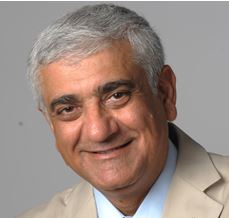
Mr. George Anayiotos, Chief Economist, Egypt, Network for Poverty Reduction and Economic Management
Mr. Anayiotos is the chief economist at the World Bank office in Cairo
He is of Cypriot origin. For over 20 years he filled different positions in the International Monetary Fund, he also taught at several universities.
Before filling his current position, Mr. Anayiotos held the post in the money and capital markets management at the International Monetary Fund, where he worked on technical cooperation with Bosnia and Herzegovina, Burundi, Ivory Coast, Mali, Mauritius, Senegal, Serbia, Togo, on topics such as public debt management and restructuring of banks monetary and foreign exchange policies.
He also served in the former positions in managerial levels for Africa, Europe and the funding and the time of administration to review the policies and the International Monetary Fund. He assumed tasks in Armenia, Belgium, Bulgaria, Latvia and San Marino and Slowickia.
From 1997 to 2000, he served as Resident Representative of the International Monetary Fund in Armenia.
Anayioto holds a doctorate in international economics and economic development from New York University. He has taught in Colorado and George Washington universities and Naaobolis Cyprus.
Languages: English, French, Greek
Tunisia
Mrs. Eileen Murray
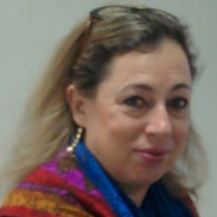
Eileen Murray, a US and Greek national is working at the World Bank, Country Manager for Tunisia, based in Tunis.
Murray joined the World Bank in 1989 as a Financial Analyst in the Africa Region. She has worked extensively on fragile states in countries such as Liberia, Sierra Leone, Burundi, Rwanda, West Bank and Gaza. Prior to her current assignment, Murray worked as the Human Development Sector Leader for West Bank and Gaza since 2008 based in Jerusalem. She worked on a broad range of issues including social safety nets, pensions, and education reforms.
One of her main achievements in West Bank and Gaza was her leadership in a $300 million emergency multi-donor trust fund for an emergency program for West Bank and Gaza which in turn leveraged over $300 million from 11 donors to finance emergency health, education, electricity, and water and sanitation programs. She also participated in the design of one of the better performing cash assistance programs for West Bank and Gaza, using innovative targeting mechanisms to make sure that the poorest households, especially in Gaza were included in the program. This program has since expanded and the Palestinian Authority now uses this safety program as one of its key social assistance programs. Prior to that, Ms. Murray worked for over 15 years on Community Driven/Local Development Operations in the Middle East and North African and sub-saharan Africa regions and therefore has an extensive technical knowledge in many sectors including infrastructure, agriculture, rural roads, water and sanitation, food security, etc. Murray has worked in over 40 middle and low income countries and supervised over 50 World Bank funded investment lending projects.
Between 2001 and 2005, Murray worked on Liberia and Sierra Leone where she participated in the design of emergency community driven operations that contributed significantly to rebuilding social and economic infrastructure and related services in poor rural communities. Both of these programs, to this date continue to receive financing from the Bank and other donors. In addition, in Sierra Leone, Murray was one of the team leaders for the demobilization and reintegration of the ex-combatants program, which was one of the Bank's significant contributions in Sierra Leone, as it was instrumental in facilitating the country's transition to peace.
Murray graduated from the George Washington University and holds an MBA in Finance.
Languages: Greek, English, French, Arabic
Morocco
Mr. Simon Gray
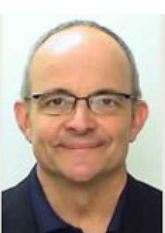
Simon Gray is the World Bank Country Director for the Maghreb (Algeria, Libya, Malta, Morocco and Tunisia) based in Rabat. He has been with the World Bank since 1992. Mr. Gray has extensive middle income country experience. As the Bank’s Country Manager in Serbia (2007-2010), he guided the Bank’s partnership strategy in supporting the country’s transition to a market economy and closer association with Europe. As the Lead Country Officer for Bosnia and Herzegovina (1999-2004), Mr. Gray supported Bank efforts to help build a single economic-space in a complex post-conflict environment, dealing with a wide range of actors in government, civil society and the international community.
As the Chief Administrative Officer for the Latin America and Caribbean Region (2005-2007), Mr. Gray over saw the business planning and execution of a $167 million annual administrative budget.
Mr. Gray comes from a private sector and finance background. Prior to joining the Bank, he worked at the Merchant Bank of Central Africa, and as Chief Economist for the Confederation of Zimbabwe Industries, both in Harare, Zimbabwe. On joining the Bank, his initial assignments were in private sector development in economies as diverse as South Africa, Madagascar, Lesotho, Mauritius and the Seychelles.
Simon Gray holds a Master degree equivalent from IGIA, Groupe ESSEC (Ecole Supérieures des Sciences Economiques et Commerciales) in International Agri-Food Economics and is a graduate from Kings College (QMC), London.
Mr. Gray started his work in the Maghreb at the time of the Arab Spring and has been responsible for overseeing an adjustment in Bank assistance to meet the rapidly changing needs of Maghreb countries, most notably in Tunisia, Libya and Morocco.
Languages: English, French, Spanish
Mr. Jean-Pierre Chauffour
Lead Country Economist for Morocco and Regional Trade Coordinator, Middle East and North Africa

Jean-Pierre Chauffour is Lead Country Economist for Morocco and Regional Trade Coordinator in the Middle East and North Africa Region at the World Bank.
Since joining the World Bank in 2007, Mr. Chauffour has held various assignments, including Advisor in the International Trade Department and Lead Economist in the Poverty Reduction and Economic Management Network, specializing on issues related to economic competitiveness, regionalism, and economic integration. Prior to joining the World Bank, Mr. Chauffour worked for 15 years at the International Monetary Fund, where he held various positions, including mission chief in the African Department and Head of Office and Representative to the World Trade Organization and United Nations in Geneva. He also spent two years as a Senior Economist in the Directorate for Economic and Financial Affairs at the European Commission. Over his career, Mr. Chauffour has worked and provided economic policy advice in many emerging countries, most extensively in the Middle East, Africa, and Eastern Europe. His main centers of interest are economic development, macroeconomic management, and economic freedom. He started his career as a macroeconomist with the Paris-based Centre d'Etudes Prospectives et d'Informations Internationales.
Mr. Chauffour holds master degrees in Economics and Money, Banking, and Finance from the Panthéon-Sorbonne University in Paris. He is the author of The Power of Freedom: Uniting Human Rights and Development (Cato Institute, 2009) and co-editor of Preferential Trade Agreement Policies for Development: a Handbook (World Bank, 2011) and Trade Finance during the Great Trade Collapse (World Bank, 2011). His most recent book on the aftermath of the Arab Spring is entitled From Political to Economic Awakening in the Arab World: the Path of Economic Integration (World Bank, 2013).
Mr. Najy Benhassine
Practice Manager, Middle East and North Africa, Trade & Competitiveness

Najy Benhassine is the Practice Manager for the Middle East & North Africa Region for the Trade & Competitiveness Global Practice of the World Bank Group. Prior to his appointment in this position, he was the global Manager of the Business Regulations practice for the World Bank Group.
Previously, Mr. Benhassine was based in Rabat, Morocco between 2007 and 2011 and was in charge of the private sector development portfolio of the Maghreb for the World Bank. He also worked on education, land reform and health service delivery. An Algerian national, he joined the World Bank Group in Washington D.C. in 2001, after working with McKinsey and Co and teaching at the Swiss Graduate Institute of International Studies.
Mr. Benhassine is the co-author of the 2009 World Bank flagship publication on the private sector in the MENA region, ‘From Privilege to Competition’.
He is a graduate of the Swiss Federal Institute of Technology, the Paris Graduate School of Management, the Paris School of Economics and holds a PhD in Economics from MIT.
Contact
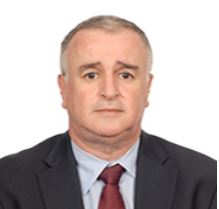
Omar Bougara is the Alternate Executive Director from Algeria representing Afghanistan, Algeria, Ghana, Iran, Morocco, Pakistan and Tunisia.
From 2012–2014, Mr. Bougara served as the Executive Director for this Constituency. His previous appointments include Chief of Staff to the Ministry of Finance in Algeria and Executive Director at The African Development Bank. He also served as Lecturer at the Ecole Superieure de Commerce in Algiers.
Mr. Bougara holds a PhD and two Master Degrees in Management with a concentration in Finance from Universities in France and Great Britain.
The World Bank
1818 H Street, NW, Mail Stop MC13-1306 Washington, DC 20433 USA
Tel : +1 202-458-7458
Fax: +1 202-477-9052
eds06@worldbank.org
Djibouti, Middle East and North Africa
Resident Representative, Djibouti, Middle East and North Africa
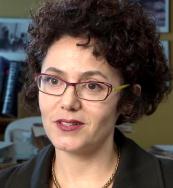
Prior to joining the World Bank, Fotouhi worked for 10 years at the International Atomic Energy Agency in Vienna and at the United Nations in Tehran.
Fotouhi has a Masters in Business Administration.
Contact
Palestine
Mr. Steen Lau Jorgensen
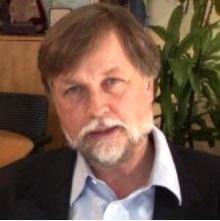
Steen Lau Jorgensen was appointed Country Director for West Bank and Gaza in October 2013. Prior to this assignment, Mr. Jorgensen was Sector Director for Human Development in the Middle East and North Africa Region of the World Bank covering health, education, labor and social protection – a job he has held since 2008. Mr. Jorgensen has worked on strategy and operational activities across a number of themes including economic and social development, governance and community empowerment for more than twenty-five years in the World Bank. He has worked across the developing world and in transition countries. He has also held corporate jobs in the World Bank advising Regional and Senior Management. He is the co-author of two strategy papers as well as academic publications on community development, climate change and poverty analysis.
Languages: Danish, English, German
Mr. Orhan Niksic
Orhan Niksic is the World Bank’s Senior Economist currently engaged as the Country Economist for West Bank and Gaza. Prior to this position, Mr. Niksic worked on countries of Central Asia region, and Bosnia and Herzegovina. Mr. Niksic joined the World Bank in 2007 from Kosovo, where he worked for three years as a Senior Economic Advisor to the European Union Pillar of the United Nations Mission in Kosovo (UNMIK) on efforts to build the economic foundations for the future state. He also worked as an Economic Advisor in the Office of the High Representative in Bosnia and Herzegovina. Prior to venturing into economic development, he was a financial analyst for Edison International in Los Angeles California working on risk management and electricity price forecasts.
Mr. Niksic holds an MS in Engineering Economic Systems and Operations Research and a BA in Economics and International Relations both from Stanford University in California.
Languages: English
Middle East and North Africa
Mr. Franck Bousquet
Director of Regional Programs, Partnerships and Integrated Solutions, Middle East and North Africa
Franck Bousquet, is the World Bank’s Director of Regional Programs, Partnerships and Integrated Solutions in the Middle East and North Africa (MENA) Region. Franck manages the World Bank’s regional engagement with partners in MENA, including the Arab bilateral and regional funds, the European Commission as well as other regional and international financial institutions. Franck also manages the World Bank regional programs in selected sectors and leads specific initiatives requiring cross-sectoral collaboration. Prior to this position, Franck was the World Bank’s Sector Manager of the Urban and Social Development Sectors in the MENA Region. Franck was also the World Bank Regional Coordinator for Disaster Risk Management in MENA. Between 2010 and 2011, Franck was Program Coordinator for Central and Western Africa in the Bank's Water and Urban Unit, overseeing a portfolio of about US$2 Billion covering 20 countries in Central and Western Africa. From 2008 to 2009, Franck was acting Sector Leader for the Democratic Republic of Congo and the Republic of Congo for the Bank’s Sustainable Development Department. Prior to joining the Bank, Franck worked as the Finance Director of a water utility and as the Adviser for Economic and European Affairs at the French Highway Directorate. He has also worked for a number of investment banks, focusing on asset management, derivative strategies and risk management. Franck holds a MBA from Columbia Business School and a graduate diploma in engineering from the National Engineering School of Public Works, Lyon, France. He has published numerous papers, with particular emphasis on infrastructure financing and Public Private Partnerships.
Contact
Gulf Region (Bahrain, Oman, Qatar, and the UAE)
Mr. Jamal Al-Kibbi

Jamal Al-Kibbi is currently the Program Manager for GCC countries at the World Bank, directly responsible for country relations and the technical assistance program with Bahrain, Oman, Qatar, and the UAE. He is an expert in Middle East policy formulation and implementation, economic management, and project finance and management. Working at the World Bank for almost 25 years, he held positions in the Africa Region, Middle East and North Africa Region, World Bank Institute, and the Executive Board.
He was posted in Riyadh, Saudi Arabia from 2007-2009 as Country Manager, where he was responsible for World Bank relations with the Saudi Authorities and the Saudi Technical Assistance Program. He was also posted in Cairo, Egypt from 2002-2006 as Deputy Representative of the World Bank, where he was responsible for facilitating the World Bank portfolio of projects in Egypt.
Mr. Al-Kibbi, a Lebanese national, holds a PhD in Economics from Georgetown University (1993) and was Visiting Professor of Development Finance at Georgetown University.
Languages: English, Arabic, French
Mr. Nadir Abdellatif
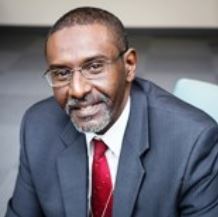
Nadir Abdellatif Mohammed is the Country Director of the GCC Countries in the Middle East and North Africa region of the World Bank. He joined the Bank in 1998 as Country Economist for Egypt and then Yemen. He joined the ECA region as Country Manager (Albania) and returned to the Middle East and North Africa (MNA) region as Operations Director in 2007. During 2010-2012, Dr. Mohammed was on external assignment from the Bank where he served as Acting Director of Strategy for the Prime Minister’s Office, State of Kuwait. He also served as Senior Advisor in the Poverty Reduction and Economic Management (PREM) network during 2009-2010 and also from 2012-1013.
Before joining the Bank, Dr. Mohammed worked in two multilateral development banks, the African Development Bank (1994-1996) and the Islamic Development Bank (1996-1998). Mr. Mohammed started his career in academia as a lecture and research officer in the universities of Khartoum (Sudan), Addis Ababa (Ethiopia), Cambridge (UK), and Oxford (UK).
Dr. Mohammed is a graduate of the University of Khartoum (BS in Economics) and has two post-graduate degrees in Economics from the University of Cambridge (MPhil and PhD). Dr. Mohammed has published widely on issues of economic development, public finance, conflict and civil wars, natural resource management, poverty reduction, governance, and defense economics.
Languages: Arabic, English, French
Kuwait
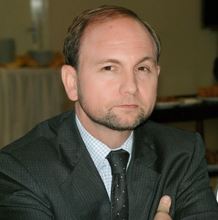
Between 2009 and2013, Raad took a leave of absence from the World Bank and worked in the Quartet Mission in Jerusalem, first as an Advisor and later as Head of the Mission, to support Palestinian economic development.
His primary research interests are in health equity, health financing and health systems reform. He is a founding member of several regional and international organizations dedicated to peace-building, sustainable development and global health. He has published several articles on public health and development. He has a PhD in International Health Policy and Economics from the Harvard School of Public Health, and a Master’s degree in International Relations from the Johns Hopkins School of Advanced International Studies.
Languages: English
Libya
Mr. Marouane El Abassi
World Bank Representative in Libya, Middle East and North Africa
Marouane El Abassi holds a Doctorate in Economics from the University of Paris I Pantheon Sorbonne, a MS degree in Economics Mathematics & Econometrics from the University Paris 2 and a MS degree in Agro- Economics, Paris I Pantheon Sorbonne- INRA PARIS. He holds an aggregation in economics and since 2007 he was appointed on the position of full professor at the University of Carthage. Marouane El Abassi has published several research articles in leading academic journals and conference proceedings, and was awarded several teaching and research excellence awards. He has taught extensively on MBA and executive programs. He was invited as a visiting professor in the University of Tsukuba and Rensselaer Polytechnic Institute at New work. Since, 1997, he was recruited as a Senior Advisor at the Institut Arabe des Chefs d’Entreprises “IACE” , expert at the Tunisian Institute of Strategic Studies, and as an Economic Advisor to the Minister of Trade , Tourism and Handcraft in charge of the coordination of the of Export Development Projects financed by the World Bank. Since January 2008, he joined the World Bank Group as a Senior Economist and Country Program Coordinator for Libya. Since November, 2010, he was appointed as the World Bank Representative in Libya.
Yemen and Egypt
Mr. Ashish Khanna
Lead Energy Specialist, Energy & Extractives
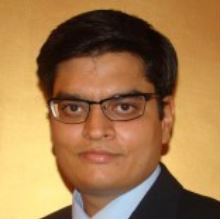
Ashish Khanna is the Lead Energy Specialist based out of Cairo and leads the World Bank's Egypt and Yemen energy program.
His responsibilities involve building the program strategy, ensuring its quality, and managing client relationships with the senior-most levels in government, public organizations, the private sector, and industry forums. Mr. Khanna, an Indian national, is also part of World Bank’s global knowledge teams on energy sector reforms, building sustainable institutions and clean energy.
Prior to his Egypt assignment, Mr Khanna led the India Energy program of World Bank.
Before joining the World Bank in 2005, Khanna worked with KPMG/Arthur Andersen as senior manager in infrastructure and government practice. Mr Khanna has spoken in multiple international forums on energy sector and published various papers; where some of his recently published paper include Transforming Electricity Governance in India (2015), Performance of Renewable Energy Auction in Brazil, India and China (2014), and Lighting Rural India (2014). Over last 18 years, he has worked across the energy sector value chain on Oil and Gas, Power, Renewables and Energy Efficiency.
Mr. Khanna holds an undergraduate degree in economics and a master's degree in business administration, with specialization in finance. He also completed his master's in public administration at Harvard's Kennedy School of Government (Edward S. Mason Program), with Lucius N Littauer fellowship for academic excellence and leadership potential.
Contact
Cairo, Egypt
Tel: +202 2574 1670
Mr. Asad Alam
Egypt, Yemen and Djibouti, Middle East and North Africa
Areas of expertise: Global Economy
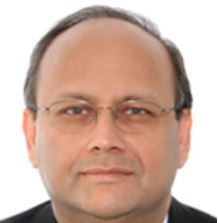
Mr. Asad Alam is the new Country Director for Egypt, Yemen and Djibouti from July 1, 2015, based in Cairo. In this position, he will lead the development and implementation of the World Bank Group’s country partnership frameworks for these countries.
Prior to taking up this post, Mr. Alam has served as Country Director for Southern Africa covering South Africa, Botswana, Lesotho, Namibia and Swaziland and earlier as Country Director for the South Caucasus covering Armenia, Azerbaijan and Georgia.
An economist by training, Mr. Alam joined the World Bank as a Young Professional in 1993. He has worked in different regions of the world including Africa, Central Asia, East Asia, Eastern Europe and Latin America. He has wide ranging experience of working on development issues of productivity, growth, job creation, poverty reduction, inequality, trade, and fiscal. He has written on various subjects and his most recent books include: Making it Happen: Selected Case Studies of Institutional Reforms in South Africa (2015, forthcoming), Fighting Corruption in Public Services: Chronicling Georgia’s Reforms (2012), Unleashing Prosperity: Productivity Growth in Eastern Europe and the Former Soviet Union (2008) and Growth, Poverty and Inequality in Eastern Europe and the Former Soviet Union (2005).
Mr. Alam is an Indian national and holds a Ph.D. in Economics from Columbia University, USA, and a B.Sc. in Economics from The London School of Economics and Political Science, UK.
Langues: anglais, ourdou, hindi
Contact
Tel : +202 2574 1670
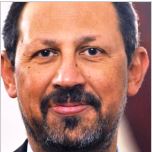
Dr. Hamed has over than 30 years of experience working in human development in different organizations such as Unicef, and Plan International.
He also worked as Human Development Coordinator for four Years based in Cairo. He had worked extensively on social protection approaches in health and as integrator of health in multi-sectoral projects.
In Egypt, he managed a number of health and social protection projects such as Health Sector Reform, Population, Schistosomiasis Control, Health Insurance, Healthcare Quality Improvement, Social Fund III, Social Protection Initiative, contributed to the work on the following projects: Cash Transfer projects and Integrated Sanitation, and designed the Labor Intensive Project.
He also contributed to the development of a paper “Roadmap for achieving Social Justice in the healthcare sector in Egypt".
In Yemen, he managed and/ or designed the Health and Population, Schistosomiasis Control, Safe Motherhood, Healthy Mother, Maternal and Newborn Voucher, and Integrated Nutrition Conditional Cash Transfer projects.
He also worked in a number of other countries including Iran, Morocco, Djibouti, Lebanon, Oman, and Vietnam on a number of health projects.
Mr. Hafez Ghanem
Vice President, Middle East and North Africa
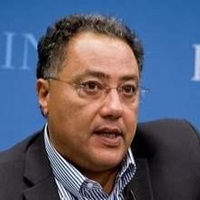
Hafez Ghanem, an Egyptian and French national, is the Vice President of the World Bank for the Middle East and North Africa since March 2, 2015. He is a development expert with more than thirty years of experience in policy analysis, project formulation and supervision, and management of multinational institutions. Dr. Ghanem leads the World Bank’s engagement with 20 Middle East and North African countries through a portfolio of ongoing projects, technical assistance and grants worth more than US$13 billion. Eradicating extreme poverty and promoting shared prosperity through the creation of opportunities are core to his vision for the Middle East and North Africa Region.
Prior to his appointment as Vice President, Dr. Ghanem was a Senior Fellow at the Brookings Institution in the Global Economy and Development program leading the Arab economies project, focused on the impact of political transition on Arab economic development.
Between 2007 and 2012, he served as the Assistant Director-General at the Food and Agriculture Organization of the United Nations (FAO). Thus, he was responsible for the Economic and Social Development Department and FAO’s analytical work on agricultural economics and food security, trade and markets, gender and equity, and statistics. In this role he and his counterpart in OECD coordinated the preparation of the International Organizations’ recommendations to the 2011 G20 meeting on how to respond the global food crisis. He also led the reforms of the Committee on World Food Security to make it more inclusive and responsive to country needs.
Dr. Ghanem returns to the World Bank where he had already 24 years’ experience (1983-2007), and has worked on Bank operations and initiatives in over 20 countries in Africa, Europe and Central Asia, Middle East and North Africa, and Southeast Asia. His previous positions at the World Bank include: Country Director for Nigeria where he led a multinational team of more than 100 professionals, managing the Bank’s loan portfolio of some USD 1.5 billion; Country Director for Madagascar, Comoros, Mauritius and Seychelles; and Sector Leader for Public Economics and Trade Policy in the Europe and Central Asia Region. Dr. Ghanem joined the World Bank in 1983 as a Young Professional and worked as a research economist before moving on to senior economist roles in West Africa and South Asia.
He has many publications in professional journals and was a member of the core team that produced the World Bank’s 1995 World Development Report.
He holds a bachelor’s and master’s degree in Economics from the American University in Cairo and a PhD in Economics from the University of California, Davis.
Languages: Arabic, English and French.
Mr. Shanta Devarajan
Chief Economist, Middle East and North Africa
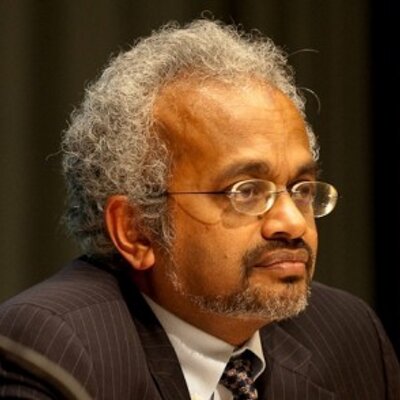
Hanta Devarajan is the Chief Economist of the World Bank’s Middle East and North Africa Region. Since joining the World Bank in 1991, he has been a Principal Economist and Research Manager for Public Economics in the Development Research Group, and the Chief Economist of the Human Development Network, the South Asia Region and Africa Region. He was the director of the World Development Report 2004, Making Services Work for Poor People. Before 1991, he was on the faculty of Harvard University’s John F. Kennedy School of Government. The author or co-author of over 100 publications, Mr. Devarajan’s research covers public economics, trade policy, natural resources and the environment, and general equilibrium modeling of developing countries. Born in Sri Lanka, Mr. Devarajan received his B.A. in mathematics from Princeton University and his Ph.D. in economics from the University of California, Berkeley.
Mr. Junaid Kamal Ahmad
Chief of Staff, World Bank Group, EXC - Office of the President 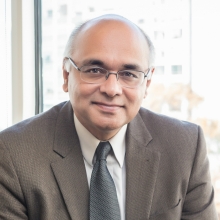
Junaid Ahmad is the Chief of Staff of the Office of the President at the World Bank. Junaid, a Bangladeshi national, joined the Bank as a Young Professional in 1991, working as an Economist in Africa and Eastern Europe before joining the Africa Infrastructure Unit.
Prior to joining the President’s office in January 2016, Junaid was the Senior Director for the Water Global Practice, a position he held since the creation of the Global Practices in July 2014. In this role, Junaid has built a strong and collaborative Global Practice and has brought a strong track record of management and leadership in the area of service delivery and international partnerships, combining intellectual and analytical rigor with strategic operational focus. Junaid has championed the Practice’s focus on water and the economy, and emphasized institutions and resilience in water management.
Junaid spent 10 years in the field, first as the Deputy Resident Representative and Principal Economist in Johannesburg, and then as Regional Team Leader of the Water and Sanitation Program in New Delhi. In 2004, he was a team member of the World Development Report (WDR): Making Services Work for Poor People. From 2004-2008, he was the Sector Manager for Social Development in South Asia Region and subsequently for Urban Water & Sanitation before taking on the latter responsibility for the Africa Region in 2010. He was also the Director for Sustainable Development in the Middle East and North Africa Region, a position he held from 2012-2014.
He holds a PhD in Applied Economics from Stanford University, an MPA from Harvard University, and a BA in Economics from Brown University.
Saudi Arabia
Mr. Khalid S. Alkhudairy
Executive Director World Bank
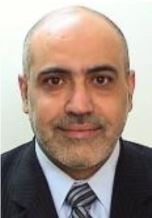
Khalid S. Alkhudairy, a Saudi national, has been serving as Executive Director at the Board of the World Bank Group, representing Saudi Arabia (EDS22), since November 1, 2014.
Prior to joining the Bank as an Advisor in 2009, he served the government of Saudi Arabia in various capacities. Mr. Alkhudairy held the position of Economic Advisor in the Division of International Organizations and Financial Institutions, Ministry of Finance (2008 to 2009); Economist (2002 - 2004), and Accounts Analyst (1993 - 2000) in the Division of Economic Affairs, Ministry of Finance and National Economy. Furthermore, Mr. Alkhudairy was a teaching instructor at the Colorado State University, US (2006 - 2007). From 1989 to 1993, he worked as an accountant and as an auditor in the Grain Silos and Flour Mills Organization in Riyadh, Saudi Arabia.
In addition to a PhD in Economics, Mr. Alkhudairy also received a M.A. in Economics from the Colorado State University. He also holds a B.S. in Accounting from the Administration Science College of the King Saud University in Riyadh, Saudi Arabia.
Lebanon, Syria, Jordan, Iraq and Iran
Mr. Ferid Belhaj
Director for the Middle East, Middle East and North Africa 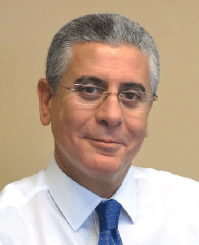
Ferid Belhaj was appointed World Bank Director for the Middle East on September 17, 2012 covering Lebanon, Syria, Jordan, Iraq and Iran. He served as World Bank Director for the Pacific Region (2009-2012), Special Representative to the United Nations in New York (2007-2010), and Country Manager for Morocco (2002-2007). He joined the Bank in 1996 as a Senior Counsel in Legal Department.
Contact
Mr. Nasir Mahmood Khan Khosa
Executive Director, Executive Directors
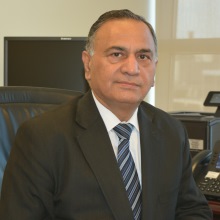
Nasir Mahmood Khan Khosa is the Executive Director from Pakistan representing Afghanistan, Algeria, Ghana, Iran, Morocco, Pakistan and Tunisia. He holds this position since November 1, 2014.
Previously, Mr. Khosa was appointed Alternate Executive Director for this Constituency from 2013-2014. Prior to that, he served the Government of Pakistan since 1980. His latest appointments include Secretary to the Prime Minister, Secretary to the Ministry of Finance and Chief Secretary to the Government of the Punjab.
Mr. Khose holds three Master Degrees: Master of Arts (M.A.) in English Literature, Government College, Lahore, Pakistan; Master of Public Administration (M.P.A.) – Specialization in Development Economics, Pennsylvania State University, USA; and a Master of Science (M.Sc.) in Defense and Strategic Studies, Quaid-e-Azam University, Islamabad, Pakistan. He earned a Bachelor of Laws (LL.B.) from the University of the Punjab, Lahore, Pakistan.
Contact
Nasir Mahmood Khan Khosa
The World Bank
1818 H Street, NW, Mail Stop MC13-1306 Washington, DC 20433 USA
Tel : +1 202-458-7458
Fax: +1 202-477-9052
eds06@worldbank.org
www.worldbank.org/eds06
Mr. Merza Hussain Hasan
Executive Director, EDS11, Executive Directors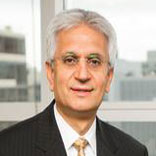
Mr. Merza Hasan, a Kuwaiti national, was elected in 2006 to represent thirteen countries as Executive Director to the World Bank Group.
Additionally, in 2012, Mr. Hasan became the Dean of the Board of Executive Directors.
As an Executive Director, Mr. Hasan has a dual responsibility, as he represents the interests and concerns of his constituency to the Boards and the Bank’s management, as well as the interests and concerns of the Bank to the group of countries that elected him.
In his role, Mr. Hasan considers and decides on the proposals made by the President on: IBRD loans and guarantees, IDA credits and grants, IFC investments, MIGA guarantees; and decides on policies that impact the World Bank's general operations.
He was the Undersecretary of the Industrial Sector in Kuwait, and held various positions at the University of Kuwait and the Embassy of Kuwait in the United States, as well as the private sector. Mr. Hasan was also a Board Member of several institutions.
Mr. Hasan holds a Ph.D in Management Science from the Imperial College of Science, Technology and Medicine, U.K. Mr. Hasan had a diverse career prior to assuming his position at the World Bank.
Contact:
Merza Hussain Hasan
The World Bank
1818 H Street, Washington, DC 20433
Tel : +1-202-473-1000
Fax: +1-202-477-6391
eds11@worldbank.org
worldbank.org/eds11
Mrs. Tara Vishwanath
Lead Economist, Middle East and North Africa
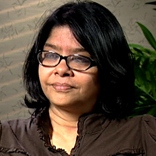
Tara Vishwanath is a Lead Economist in the Middle East and North Africa Region's Poverty Reduction and Economic Management group of the World Bank. She coordinates work in the region on poverty, gender and impact evaluation. Prior to joining MENA, she led the poverty group in the South Asia region. Before joining the World Bank, she was a Professor in the Department of Economics at Northwestern University.
Contact
Tvishwanath@worldbank.org
{/mprestriction}