Consumer Psychology: Understanding and Meeting Customers' Psychological Needs in Startups
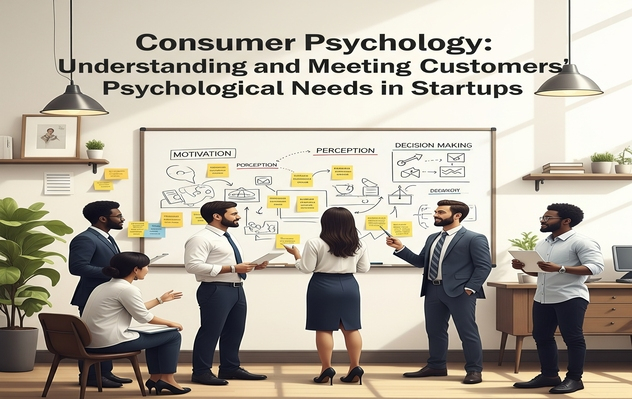
In today's competitive startup landscape, success extends beyond merely possessing an innovative product or service; it demands a profound understanding of human motivations and the underlying behaviors that drive consumer decisions.
Consumer psychology, a branch of psychology that studies the behavior of individuals as "consumers" (as Psychology Today describes it), provides powerful tools for startups to decode these motivations, designing experiences that not only fulfill functional needs but also resonate with customers' emotional and psychological aspects, thereby fostering deep loyalty and sustainable growth.
- Leveraging Cognitive Biases Smartly in Purchasing Decisions
The human brain is replete with cognitive biases that influence our daily decisions, often making them irrational yet predictable. Savvy startups can ethically harness these biases to drive consumer behavior, enhancing the perceived value of their product or service:
- Anchoring Effect: People tend to rely heavily on the first piece of information they receive (the anchor) when making subsequent decisions.
For instance, when launching a new product, startups can present an initial "higher" price (as a reference point) and then offer a discounted price, making the discounted price appear significantly more appealing. This isn't about deception, but about framing perceived value. - Loss Aversion: Research in behavioral psychology suggests that people prefer avoiding losses with twice the pain compared to achieving gains of the same value.
Startups can frame their offers to focus on what the customer stands to lose if they don't make a purchase. Example: "Don't miss out on saving $50" instead of "Get a $50 discount," or emphasizing "avoidance" rather than "acquisition." - Social Proof: Humans are social creatures prone to imitating the behavior of others, especially in situations of uncertainty. Displaying customer testimonials, high ratings, active user statistics, or phrases like "bestseller" and "what others are buying now" can significantly build trust and stimulate purchases.
This instills a sense of security and reduces the perceived risk of making a wrong decision. - Scarcity Effect: Things that appear rare or limited are often perceived as more attractive and valuable. Creating a sense of scarcity, whether real or carefully designed (e.g., "limited stock," "offer ends in 24 hours"), prompts customers to make quick decisions for fear of missing out. This taps into the human tendency to act swiftly when sensing a time or resource constraint.
- Designing User Experience (UX Design) Based on Psychological Principles
Effective user experience goes beyond aesthetics; it's a meticulously crafted journey that considers how humans think and interact with interfaces. Startups can integrate these psychological principles into the design of their digital and physical products to enhance engagement and satisfaction:
- Gestalt Principles: These principles explain how the human brain perceives and interprets visual elements as a "whole." Principles such as Proximity (elements close together are perceived as a group), Similarity (elements similar in shape or color are perceived as a group), Continuity (curved or flowing lines are perceived as continuous), and Closure (the brain fills in gaps to create a complete image) enable startups to organize information in a way that is easy to process and understand, making the interface clearer and more intuitive.
- Maslow's Hierarchy of Needs: While a product might meet basic needs (like easy communication in a messaging app), exceptional startups can strive to fulfill higher-level needs in the hierarchy (e.g., belonging through social features, esteem through leaderboards and rewards, or self-actualization through personalization tools that foster individual creativity).
- Usability and Cognitive Load: Cognitive load refers to the amount of mental effort required to use a product or complete a task. Reducing complexity and simplifying tasks and interfaces minimizes this load, making the experience enjoyable and less frustrating. Startups should aim to design intuitive interfaces that require minimal thought, guiding the user smoothly through processes.
- Behavioral Loops: Designing products to encourage repetitive behaviors and build habits among users, as outlined in the "Hook Model" by author Nir Eyal. This model involves four phases: a Trigger that prompts the user to act, an Action performed by the user, a Variable Reward the user receives, and an Investment the user makes in the product (e.g., time, data, content). This model helps build strong, lasting relationships with users.
- Building Brands and Emotional Connection with the Audience
Strong brands don't just sell products; they sell emotions and belonging, creating an identity that customers want to interact with. Startups, even with limited resources, can build this emotional connection through:
- Storytelling: Humans are instinctively drawn to stories. Sharing the startup's founding story, the founders' passion, or the pressing problem they are trying to solve can create a strong emotional bond, eliciting empathy and trust. A good story makes the brand memorable and more human.
- Shared Values: Identifying and communicating core brand values that align with the target customers' values can lead to deep loyalty that transcends mere commercial transactions. For instance, companies focused on sustainability or social impact can attract a loyal customer base who share those same values.
- Brand Personality: Giving the brand a clear and distinctive personality (e.g., friendly, bold, trustworthy, playful) makes it more relatable and human in customers' minds, facilitating a connection.
- Emotional Response: Understanding the precise emotions their products or services evoke (e.g., joy, comfort, trust, excitement, security) and designing marketing messages, visual content, and user experiences to effectively amplify these emotions.
- Intrinsic and Extrinsic Motivation in Marketing and Habit Building
Understanding what motivates customers is crucial for designing effective marketing strategies. Startups can utilize a balanced mix of intrinsic and extrinsic motivation:
- Intrinsic Motivation: Focusing on benefits that come from within the individual, such as a sense of accomplishment, personal growth, mastering a new skill, or self-expression. Example: A language learning app that emphasizes the joy of learning and cultural discovery rather than merely passing tests. This type of motivation leads to longer, more sustainable engagement.
- Extrinsic Motivation: Using external rewards, such as discounts, points, badges, or competitions. Startups often begin with extrinsic motivation to attract initial attention and encourage trials, but they need a strategy to gradually transition towards fostering intrinsic motivation to ensure long-term loyalty and avoid dependence on continuous rewards.
- Reciprocity Principle: People tend to feel obligated to reciprocate when they receive something free or valuable. Offering value upfront (e.g., valuable content, a free trial, an initial consultation) can create a sense of obligation in the customer to return the favor by making a purchase or engaging positively with the brand.
- Gamification Techniques: Adding game-like elements (such as points, levels, challenges, leaderboards) to the product experience can increase engagement and participation. As Utpal Dholakia Ph.D. notes in Psychology Today, effective gamification goes beyond merely adding rewards; it taps into deeper psychological motivations like the need for achievement, competition, and a sense of progress.
These techniques enhance engagement by addressing fundamental psychological needs such as competence (feeling capable of accomplishing tasks), autonomy (control over choices), and relatedness (feeling connected to a community). This makes tasks feel more enjoyable and rewarding, driving users towards continuous interaction and building long-lasting habits.
In conclusion, by adopting an approach rooted in a deep understanding of consumer psychology, startups can transcend simply offering practical solutions. They can deliver experiences that align with the complexities of human behavior, building deeper and more enduring relationships with their customers, thereby laying the groundwork for success in a highly competitive market.
Sources
- Dholakia, Utpal, Ph.D. "Does Gamification Help to Connect With Consumers?" Psychology Today, June 2024. https://www.psychologytoday.com/us/blog/consumer-psychology/202406/does-gamification-help-to-connect-with-consumers.
- Eyal, Nir. Hooked: How to Build Habit-Forming Products. New York: Portfolio/Penguin, 2014.
- Journal of Consumer Research. https://www.journals.uchicago.edu/toc/jcr/current.
- Psychology Today. "Basics of Consumer Psychology." https://www.psychologytoday.com/us/basics/consumer-psychology.
- Harvard Business Review.
- Forbes.
- TechCrunch.