



- Details
- Written by: Admin Admin
- Category: Magazine
- Hits: 457
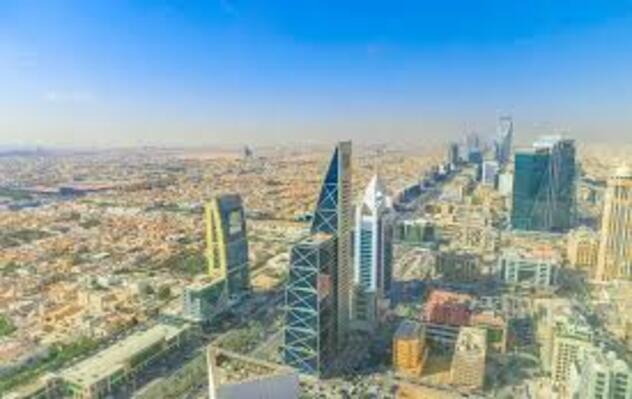
The economic environment in the Gulf region is facing mounting pressures due to the ongoing war with Iran that began in late February, negatively impacting hospitality and investment sectors across several regional economies. Despite these geopolitical challenges, the Saudi economy has shown signs of resilience, driven by stable domestic demand and the rerouting of supply chains through its western ports, at a time when the broader region is experiencing a growth slowdown and declining investor confidence.
According to a report published by Reuters, this situation has prompted some regional businesses and capital within the Gulf Cooperation Council (GCC) to relocate to the Saudi market as a safer financial and economic haven under current circumstances.
In a related context, the International Monetary Fund (IMF) mission concluded its 2026 Article IV consultation with the Kingdom, praising its strong economic fundamentals, ample liquidity, and fiscal buffers. Azim Sadikov, the IMF mission chief, stated that the Saudi economy is projected to grow by approximately 2% this year, supported by domestic demand within non-oil activities, compared to an earlier IMF forecast of 3.1% in April. Additionally, Dr. Jihad Azour, Director of the Middle East and Central Asia Department at the IMF, noted that the Saudi economy is the least affected in the Gulf by this war due to its strategic readiness, explaining that while the conflict has entered a stalemate, its economic impacts remain strong on the movement of essential commodities.
The Kingdom’s proactive readiness was demonstrated through the deployment and utilization of its alternative infrastructure to counter maritime disruptions and the Iranian blockade imposed on the Strait of Hormuz. The East-West pipeline and Red Sea ports, particularly Yanbu Industrial Port and Jeddah Islamic Port, have served as a critical lifeline, maintaining crude oil export volumes close to 5 million barrels per day while facilitating container and cargo shipping. This role extended beyond securing domestic economic stability; Saudi Arabia has acted as a logistics hub supporting neighboring Gulf economies by opening its overland corridors and transport networks to ensure an uninterrupted flow of essential goods, alongside providing regional energy supply support to other countries facing challenges, such as Egypt.
On the domestic investment and commercial front, markets are witnessing active momentum. The non-oil private sector recorded its fastest expansion in three months this past May, driven by increased output and new orders. Investment fund managers and advisors reported an acceleration in demand for fund establishment, accompanied by a repatriation of capital from other GCC states toward the Kingdom in pursuit of greater stability. Furthermore, government capital and operational spending maintained momentum to execute projects, supported by a stable banking sector with ample liquidity, the fixed peg of the Saudi riyal to the US dollar, stable inflation rates, and positive job creation across both the public and private sectors.
This landscape coincides with a pivotal adjustment in the targets of Saudi Vision 2030. The updated strategy for the 2026–2030 period, launched in April, focuses on allocating capital more selectively toward sectors yielding faster operational and productive returns—such as tourism, logistics, artificial intelligence, and industry—while scaling back or deferring heavy spending on certain megaprojects like "The Line" and the ski resort in "Trojena." The Public Investment Fund (PIF) is directly leading this competitive approach, a move welcomed by the IMF, which considered the reprioritization of public spending a prudent step to enhance investment efficiency and maintain fiscal sustainability.
In the tourism sector, the Kingdom recorded an 8% year-on-year growth in the total number of tourists (inbound and domestic) during the first quarter of 2026, reaching 37.2 million. Although inbound tourism dropped by 13% due to regional conditions, domestic tourism fully offset the decline as citizens and residents opted for local destinations and resorts as a safer and more accessible alternative. This raised national hotel occupancy to an average of 66.3%, contrasting sharply with international projections pointing to steep declines in other regional tourism destinations, such as Dubai.
Despite these positive indicators, a surge in exceptional military and government spending to mitigate conflict impacts, combined with temporary dips in oil export volumes, led to a first-quarter budget deficit of $33.5 billion. The Ministry of Finance clarified that this deficit reflects a temporary cash flow lag and accelerated investments in protective defense and logistics. Nevertheless, economists and market analysts emphasize that current elevated global oil prices are significantly offsetting the drop in export volumes, supporting projections for a swift fiscal and economic recovery once maritime navigation in the region stabilizes.

- Details
- Written by: Admin Admin
- Category: Magazine
- Hits: 303
CargoX, a UAE-based autonomous delivery platform, has announced the closing of a $250 million funding round led by investment firm BlueFive Capital. This move marks the company’s transition from operational trials to actual commercial expansion.
This funding represents one of the largest investments directed toward an autonomous logistics company in the region. It positions CargoX within the scope of companies transitioning from "technical development" to "building operational infrastructure at scale"—a shift that typically determines the fate of companies in this capital-intensive and highly complex sector.
CargoX was founded to develop delivery solutions relying on driverless vehicles, covering multiple tiers of the supply chain: middle-mile transit between distribution centers, long-haul transport, and last-mile urban delivery. This integrated operational scope provides the company with a distinct model compared to traditional delivery firms that generally rely on a distributed network of human drivers.
The company is led by Tomaso Rodriguez, the former CEO of Talabat and a prominent figure in the region's digital delivery sector. During his tenure at Talabat, he oversaw a major expansion of regional operations leading up to an Initial Public Offering (IPO) valued at approximately $2 billion in 2024. This managerial track record is a key factor behind investor confidence in the capacity to transform CargoX from a technical model into a rapidly scalable operational business.
Company data indicates that it has already conducted operational trials of its autonomous vehicles on public roads within the UAE, as it prepares to launch gradual commercial operations in Abu Dhabi and Dubai. The company is also working within a coordinated framework with local regulatory bodies, including the Dubai Roads and Transport Authority (RTA) and transport authorities in Abu Dhabi.
This alignment is critical, given that transitioning from trials to commercial deployment in this sector depends heavily on regulatory approvals rather than just technological readiness.
Operationally, CargoX focuses on building an "autonomous logistics ecosystem" rather than a traditional fleet model. Consequently, the core value stems not only from the vehicles but from the software system that manages routing, dispatching, order management, and the interconnection of shipping and delivery points within a single network. This type of model requires intensive investments in digital infrastructure and field testing, which explains the scale of the announced funding.
According to the company's announcement, the new funding will be deployed across three primary tracks: expanding the operational network within the UAE, advancing autonomous vehicle technologies and their supporting systems, and forging partnerships with e-commerce, retail, and logistics enterprises. The strategy also includes a plan for gradual expansion into international markets at a later stage.
On the investor side, BlueFive Capital is an asset management firm headquartered in Abu Dhabi, managing approximately $15 billion in assets with a presence across several global financial centers. Its entry into this investment reflects a clear strategic pivot toward funding long-term technical infrastructure rather than just fast-growing consumer companies.
In a broader context, this funding underscores the ongoing transition of logistics firms in the region toward models driven by automation and artificial intelligence in operational management. This comes amid rising government interest in autonomous transit trials within major cities, particularly in the UAE, which has become one of the first regulatory environments in the region to permit active operational testing on public roads.
- Details
- Written by: Admin Admin
- Category: Magazine
- Hits: 365
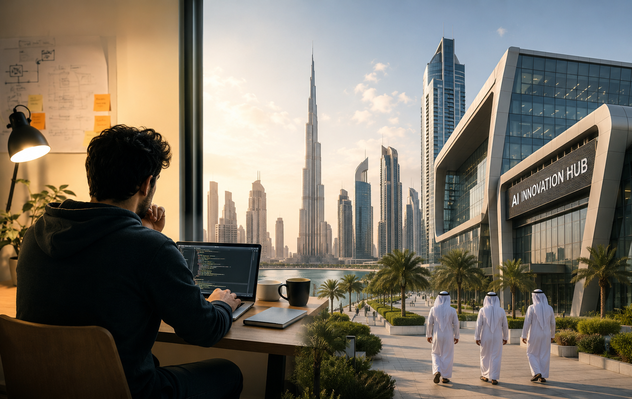
In recent years, the global economy has experienced a structural shift in how startups are built. This transformation goes far beyond a simple spike in new ventures; it fundamental redefines the entry requirements for the digital economy. At the center of this shift is Artificial Intelligence (AI).
By slashing initial product development costs and reducing reliance on legacy technical resources, AI has enabled a massive wave of individuals to launch commercial ventures without the burden of heavy corporate infrastructure.
In the United States, data from the U.S. Census Bureau clearly reflects this shift, with total business and freelance applications reaching a historic high of approximately 5.9 million. Between November 2025 and January 2026 alone, 1.56 million business applications were filed—the highest figure recorded for any three-month window in two decades.
This growth was not incremental; it represents a sharp 25.54% acceleration compared to the same period last year, signaling that market entry is no longer a rare, high-cost event, but a widely accessible option.
Shifting Structures in Global Market Entry
The analytical significance of these figures lies not just in their volume, but in what they represent. Compared to historical averages, the current monthly application rate—exceeding 478,800—is multiple times higher than pre-2004 levels, when monthly applications rarely topped 90,000.
This disparity cannot be explained away by economic growth alone; it points to a radical drop in the entry threshold of the economic system itself. In other words, the U.S. economy has not just witnessed an expansion in the number of projects, but a democratization of "becoming a founder."
However, this quantitative expansion requires careful qualitative dismantling. A substantial portion of these applications does not represent fully operational enterprises. Instead, they are preliminary registrations or applications for an Employer Identification Number (EIN)—initial legal steps that may not necessarily materialize into sustained economic activity.
Furthermore, a large percentage of these entities take the form of solo ventures or temporary projects tied to the gig economy and freelancing. Consequently, what appears to be a boom in startup creation is actually an expansion of the entry pipeline, rather than a proportional surge in actual economic output.
This distinction is crucial because it changes how the phenomenon is interpreted. The data does not necessarily indicate traditional economic inflation, but rather a redistribution of economic participation. Market entry has become low-cost and instantaneous, but survival and scaling remain subject to traditional market dynamics: customer acquisition, marketing, and building a stable revenue model. It is clear that AI has not rewritten the laws of physics for markets; it has simply front-loaded the lifecycle, making initiation effortless while leaving sustainability as challenging as ever.
In contrast, the Middle East and North Africa (MENA) region exhibits a structurally distinct model in both form and function. While the U.S. experiences a bottom-up expansion of solo founders, AI growth in the Middle East is concentrated within a highly centralized investment framework driven by the state and its sovereign wealth funds.
Direct AI investments in the region reached approximately $858 million in 2025, while broader digital transformation investments totaled around $2.1 billion in the first half of the same year.
Although total startup funding in the region hovers around $7.5 billion, AI commands a 17% to 22% share of total venture capital—a clear indicator of the sector's priority within modern investment strategies.
The most critical dynamic here, however, is not the volume of capital, but its allocation. Over 70% of AI investments are concentrated in just two countries: the United Arab Emirates and the Kingdom of Saudi Arabia. The UAE alone captures nearly 60% of total regional funding, reflecting a highly centralized pattern of capital allocation linked to sovereign projects and regulated innovation hubs.
A prime example is Abu Dhabi’s Hub71, which hosts approximately 52 AI startups out of just over 100 specialized AI companies in the entire region.
This divergence between the two markets is not just a matter of investment scale, but of economic logic. In the United States, the economy expands from the bottom up through frequent, rapid market entry by individuals and small teams. In the Middle East, expansion occurs from the top down through state-directed investment decisions and government policies that define priority sectors, inside which enterprises are then structured.
The result is a contrast between the density of innovation and the density of capital: the former tends to be fragmented and diverse, while the latter is concentrated and strategically guided.
In this context, AI cannot be understood merely as a technical tool, but as an economic catalyst redistributing the capacity for corporate creation globally. It lowers the initial barriers to entry, but it does not erase structural differences between economic environments; instead, it reproduces them in a new guise.
Reshaping the Digital Economy: American Individualism vs. Sovereign Models
The data shows that the AI-driven shift extends far beyond increasing the volume of startups; it is redistributing productive capacity within the economy itself.
The primary divide today is no longer between advanced and emerging economies, but between two distinct institutional models of market entry: a low-barrier, individualistic model in the United States, and a highly centralized, sovereign model in the Middle East.
In the U.S. paradigm, the plummeting cost of software development—enabled by generative AI and automated coding tools—has redefined the very definition of a "founder." Just a few years ago, building a Minimum Viable Product (MVP) required engineering teams and seed capital often exceeding $500,000 to reach market testing.
Today, a solo founder or a lean team can leverage LLMs and code-generation tools to build a functional MVP within weeks at a fraction of the cost. This shift has not eliminated the need for capital, but it has shifted the center of gravity from "technical build costs" to "go-to-market costs."
This structural shift is clearly visible in the composition of the U.S. workforce, which includes an estimated 29.8 million independent workers, alongside the fact that over 80% of small businesses employ no permanent staff. A massive segment of economic activity is now driven by micro-entities or individuals operating near-autonomously. In this ecosystem, AI is not just a productivity tool; it serves as an alternative operational infrastructure that compensates for the absence of large human teams in the early stages of a venture.
Yet, a rigorous reading of this trend reveals that lowering the cost of entry does not mean lowering the cost of survival. While building a product has become commoditized, customer acquisition, digital marketing, and establishing market trust remain capital-intensive and fiercely competitive.
Economic pressure has not been eliminated; it has simply been backloaded in the company's lifecycle. The early phase has low barriers, while the scaling phase has become more hyper-competitive and capital-concentrated.
Conversely, the Middle East is charting a completely different path with the exact same technology. Instead of producing an explosion of solo founders, AI is deployed within state-directed economic policies. This is evident in the allocation of capital, where direct AI investments reached $858 million in 2025, and broader digital transformation funding hit $2.1 billion in H1 of the same year. Despite total regional startup funding sitting around $7.5 billion, AI's capturing of 17% to 22% of venture capital underscores its strategic prioritization.
More telling than the volume of capital is its geographical concentration. The UAE and Saudi Arabia together account for over 70% of the region's total AI funding, with the UAE alone capturing nearly 60%. This concentration points to a developmental model reliant on sovereign institutions rather than organic horizontal market dispersion.
This pattern directly shapes the regional startup landscape. The number of specialized AI companies in the region remains modest, estimated at just over 100 firms, a significant portion of which are concentrated within designated state-backed incubators like Abu Dhabi’s Hub71, which houses 52 of these startups. This indicates that the regional ecosystem is still building its foundational base, where projects are curated and aligned with state strategies rather than left to form spontaneously in an open market.
Comparing this with the U.S. model reveals a fundamental divergence in the mechanics of company formation. In the U.S., startups are formed from the bottom up; individuals test ideas independently, and the market and venture capital markets filter the winners.
In the Middle East, a substantial portion of enterprises are conceived within pre-defined institutional frameworks, where government strategies and sovereign wealth funds identify priority sectors and subsequently direct capital toward them.
This structural divergence yields two distinct types of innovation. The American model produces high venture density, but with extreme variance in quality and survival rates. The Middle Eastern model features lower venture density, but boasts high capital concentration and strategic alignment.
Consequently, any comparison cannot be purely quantitative; it must account for how risk and opportunity are distributed within each distinct system.
On a global technical level, AI is reorganizing the layers of the digital economy into two distinct tiers: the application layer and the infrastructure layer. The application layer comprises companies building products on top of existing third-party AI models; this layer has benefited directly from the collapse in development costs.
The infrastructure layer, by contrast, involves developing foundational models, data centers, and high-performance computing (HPC)—a capital-intensive tier limited to a small pool of massive corporations and nation-states.
This division explains the divergence between the U.S. and Middle Eastern approaches. In the United States, commercial activity is heavily concentrated in the application layer, allowing individual founders to enter the market rapidly.
In the Middle East, state actors focus heavily on the sovereign infrastructure layer and long-term capital investments. This explains the central role of sovereign wealth funds and mega-projects like NEOM in Saudi Arabia, which aim to build state-level computing capacity and advanced digital infrastructure from the ground up.
Ultimately, AI is not a homonigizing force that reshapes the global economy uniformly. Instead, it acts as a catalyst that amplifies the structural differences between economic systems. While it lowers technical barriers universally, it does not distribute the benefits evenly. In the United States, it fuels a boom in solo founders and expands a low-cost creator economy. In the Middle East, it reinforces state-led economic sovereignty and concentrates capital into pre-selected strategic sectors.
Thus, the defining question of the current era is not "how many startups are being founded," but rather how the capacity to build is distributed, and who possesses the structural advantages to convert lower technical costs into sustainable economic value.

- Details
- Written by: Admin SAE
- Category: Magazine
- Hits: 348
by: Ayman Abualkhair
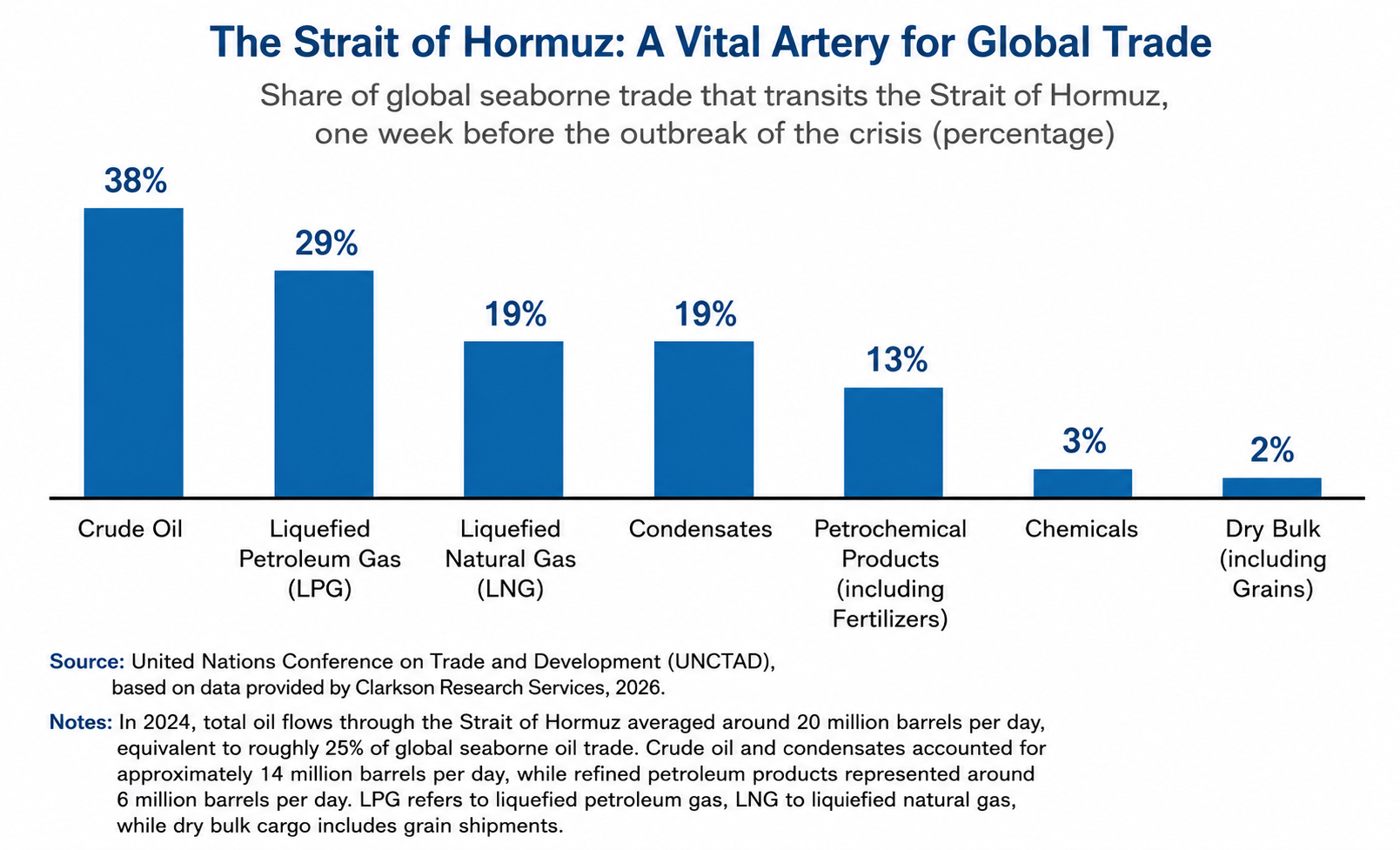
The Strait of Hormuz is one of the world’s most critical maritime chokepoints. Roughly a quarter of globally traded seaborne oil—equivalent to nearly 20m barrels a day—passes through this narrow waterway, alongside substantial volumes of liquefied natural gas and fertilisers. The continuing military escalation in the region has severely disrupted shipping through the Strait, triggering a chain reaction that extends far beyond the Gulf itself. The shock has spread across energy markets, maritime transport and global supply chains, creating disruptions that now stretch from Asian factories to American consumers, and from fuel markets to food prices.
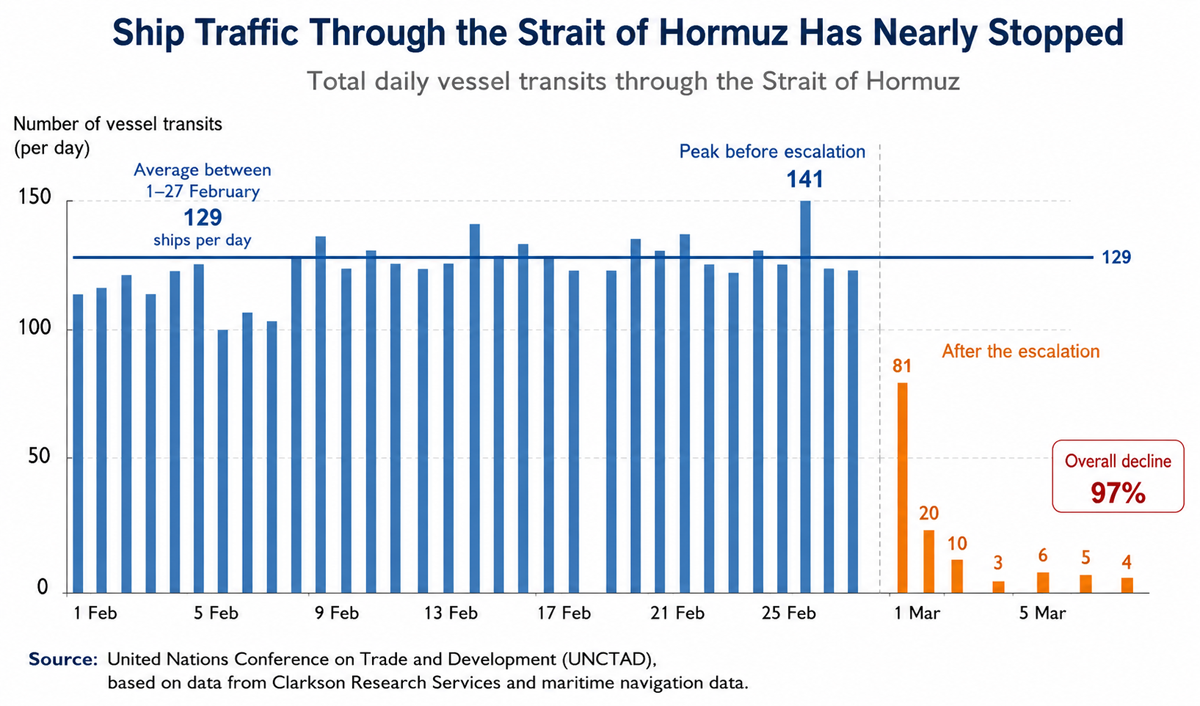
What for decades had been treated as an unlikely geopolitical scenario has abruptly become an economic reality. Since the outbreak of the American–Israeli war against Iran in late February 2026, global trade has entered a new era of uncertainty. Flows through the Strait have collapsed almost completely, prompting the International Energy Agency (IEA) to describe the crisis as “the largest disruption in the history of the global oil market.”
As shipments stalled, the market suddenly lost a vast portion of global supply at a time when oil markets were already heading towards a structural deficit. Prices reacted immediately. Brent crude climbed above $120 a barrel, while major financial institutions and energy analysts warned that a prolonged closure could push prices towards $150 during the second half of 2026.

Yet the real danger lies not only in oil prices themselves, but in the structure of the modern global economy. Energy is no longer merely a consumer commodity; it has become a fundamental input in every stage of production, transportation and manufacturing. As a result, any sharp rise in energy prices rapidly feeds into broader inflation across other sectors, including fertilisers and transport—ranging from freight rates and marine fuel costs to shipping insurance premiums. Ultimately, this raises food prices and deepens cost-of-living pressures, particularly for the most vulnerable households.
The shock comes at a moment when many developing economies are already struggling with debt-servicing burdens, shrinking fiscal space and limited capacity to absorb further price shocks. While the overall global economic impact will depend largely on the duration and scale of the disruption, the current crisis underlines the importance of closely monitoring the economic consequences of the war, especially for the world’s most fragile economies.
The world has, of course, experienced similar spillovers before. Both the COVID-19 pandemic and the outbreak of the war in Ukraine demonstrated how disruptions in energy, transport and agricultural inputs can quickly cascade through deeply interconnected global markets.
From Oil to Food: The Next Agricultural Crisis
The consequences of the Hormuz crisis do not stop at energy and industry. Gulf countries also occupy a central position in global fertiliser and agricultural chemical markets. Estimates suggest that nearly 30% of global fertiliser trade—including vital supplies of urea and ammonia—passes through the Strait of Hormuz. As shipping flows have been disrupted, fertiliser prices have surged sharply, threatening agricultural production during one of the most sensitive periods of the global planting season.
The effects are already becoming visible in international food markets. The United Nations Food and Agriculture Organisation (FAO) food-price index has climbed to its highest level in more than three years, driven by rising energy costs, fertiliser shortages and higher prices for vegetable oils. The crisis is therefore evolving from a pure energy shock into a broader food-security challenge, particularly for developing economies that remain heavily dependent on imported food, fertilisers and fuel.
1. From an Energy Shock to a Global Economic Crisis
As the American–Israeli war against Iran intensifies and the Strait of Hormuz effectively turns into a zone of naval and military blockade, the crisis has evolved far beyond a limited geopolitical confrontation. It is now emerging as the largest combined energy and trade shock to hit the global economy since the oil crises of the 1970s. According to data from the International Energy Agency (IEA), shipping flows through the Strait collapsed from roughly 20m barrels per day before the war to close to just 2m barrels per day during March 2026, while substantial portions of liquefied natural-gas exports towards Asia and Europe were severely disrupted.
The shock arrives at an exceptionally fragile moment for the world economy, which is already struggling with slowing growth, historically high levels of public debt and persistent inflationary pressures following years of monetary tightening. For that reason, the current crisis is not simply another cyclical rise in oil prices. It represents a multidimensional structural shock extending from energy into manufacturing, food systems and global trade.
Energy remains the primary transmission channel of the crisis. Oil prices surged above $100 per barrel, while major financial institutions and energy traders warned that a prolonged closure could push prices towards $150–200 in more pessimistic scenarios. Liquefied natural-gas prices also rose sharply as exports from Qatar and the UAE weakened and shipments through Hormuz were disrupted.
Economically, the crisis represents a textbook example of a negative supply shock: prices rise even as supply and output decline, generating broad inflationary pressures. What makes the current episode particularly dangerous, however, is that the shock does not remain confined to energy markets alone. It spreads rapidly through higher transportation, insurance, shipping and production costs, fuelling what economists describe as cost-push inflation.
The effects are already spilling into global industrial supply chains. Disruptions to exports of sulphur, aluminium and fertilisers from the Gulf have increased manufacturing costs, particularly across Asia, which remains heavily dependent on energy and raw materials from the region. Recent reports suggest sulphur prices have risen by more than 50%, while battery, electric-vehicle and electronics industries are beginning to face mounting supply-chain disruptions.
At the same time, the crisis is gradually evolving from an energy shock into a global food shock. Rising fertiliser prices and higher agricultural shipping costs are feeding directly into food inflation. The International Monetary Fund has warned that persistently high oil and fertiliser prices could trigger a new inflationary wave across developing economies, particularly in countries where food and energy account for a large share of household spending.
The Impact on the United States
Despite America’s increased domestic production of oil and gas over recent years, the United States remains far from insulated from the crisis. The American economy is increasingly exposed to what economists describe as “imported inflation”, whereby rising energy and manufacturing costs in Asia feed directly into higher prices for goods entering the US market. Inflation therefore reaches the American economy not only through higher fuel prices, but also through rising costs of imported electronics, automobiles and consumer goods. With petrol prices climbing above $4 per gallon in several states, the crisis has already begun to erode household purchasing power, weaken consumer confidence and weigh on private investment.
The greater danger lies in the possibility that the global economy may be drifting towards a period of stagflation—a toxic combination of high inflation, slowing economic growth and rising unemployment. The International Monetary Fund has already lowered its global growth forecast to around 3.1%, while warning that a prolonged disruption could push world growth closer to 2% under more severe scenarios, with global inflation potentially exceeding 6%.
The burden of the shock, however, is distributed unevenly across the world economy. Asia remains particularly vulnerable because it depends heavily on energy flows through Hormuz, absorbing roughly 84% of the oil and 83% of the natural gas transported through the Strait. This leaves Asian economies especially exposed to supply disruptions and rising production costs, which in turn amplify inflationary pressures across global manufacturing and trade.
In this environment, central banks face an increasingly difficult balancing act. On the one hand, they are under pressure to contain inflation through tighter monetary policy and higher interest rates. On the other, they must support economic activity as global growth slows. This tension between fighting inflation and preventing recession is becoming one of the defining macroeconomic dilemmas of the current crisis.
2. Supply Chains: Critical Yet Fragile
The crisis did not remain confined to energy markets for long. It quickly spread into global supply chains, the backbone of modern international trade. Disruptions in the Strait of Hormuz triggered a sharp rise in maritime transport costs, with oil shipping rates increasing by an estimated 54–72%. Marine fuel prices surged by as much as 100%, while war-risk insurance premiums multiplied dramatically, in some cases reaching nearly $1m per voyage.
In practical terms, this means that the cost of transporting essential goods—from energy supplies to food products—has risen sharply within a very short period of time. As a result, the problem is no longer merely the availability of goods, but increasingly the cost of delivering them. This dynamic is characteristic of supply-side inflationary crises, where rising logistical and production costs feed directly into broader price increases across the economy.
Perhaps most importantly, the crisis has exposed the fragility of the “just-in-time” production model that dominated global manufacturing over recent decades. Once celebrated as a symbol of economic efficiency, the model has increasingly revealed itself to be structurally vulnerable in times of geopolitical disruption. The heavy dependence on tightly synchronised supply chains, concentrated shipping routes and low inventory buffers has left industries across the world far more exposed to external shocks than previously assumed.
The Gulf: Between Opportunity and Vulnerability
At first glance, higher oil prices may appear to be a windfall for Gulf economies. Yet the reality is far more complicated. The closure of the Strait does not merely drive prices higher; it also disrupts the region’s ability to export energy in the first place. Even with alternative routes such as Saudi Arabia’s East–West pipeline, existing bypass infrastructure can replace only a limited portion of the lost flows through Hormuz.
Moreover, a prolonged crisis threatens the wider stability of regional trade and investment. Shipping and insurance costs have surged sharply, while geopolitical risk premiums continue to rise across Gulf markets. The result is a paradox facing the region’s energy exporters: although oil prices are climbing, the broader economic environment is becoming increasingly uncertain, exposing Gulf economies to mounting logistical, financial and geopolitical pressures.
3. Food and Fertilisers: The Delayed Crisis
The impact of the current crisis is no longer confined to energy markets, which represent the immediate shock. It is increasingly spreading into food systems—the delayed but potentially more dangerous phase of the crisis. The Strait of Hormuz is not only a vital corridor for oil shipments; it also carries nearly a third of global seaborne fertiliser trade, particularly urea, which accounts for roughly 67% of these flows.
The connection between energy and food is crucial. Higher gas prices raise the cost of fertiliser production, which in turn increases agricultural production costs and ultimately feeds into higher food prices worldwide.
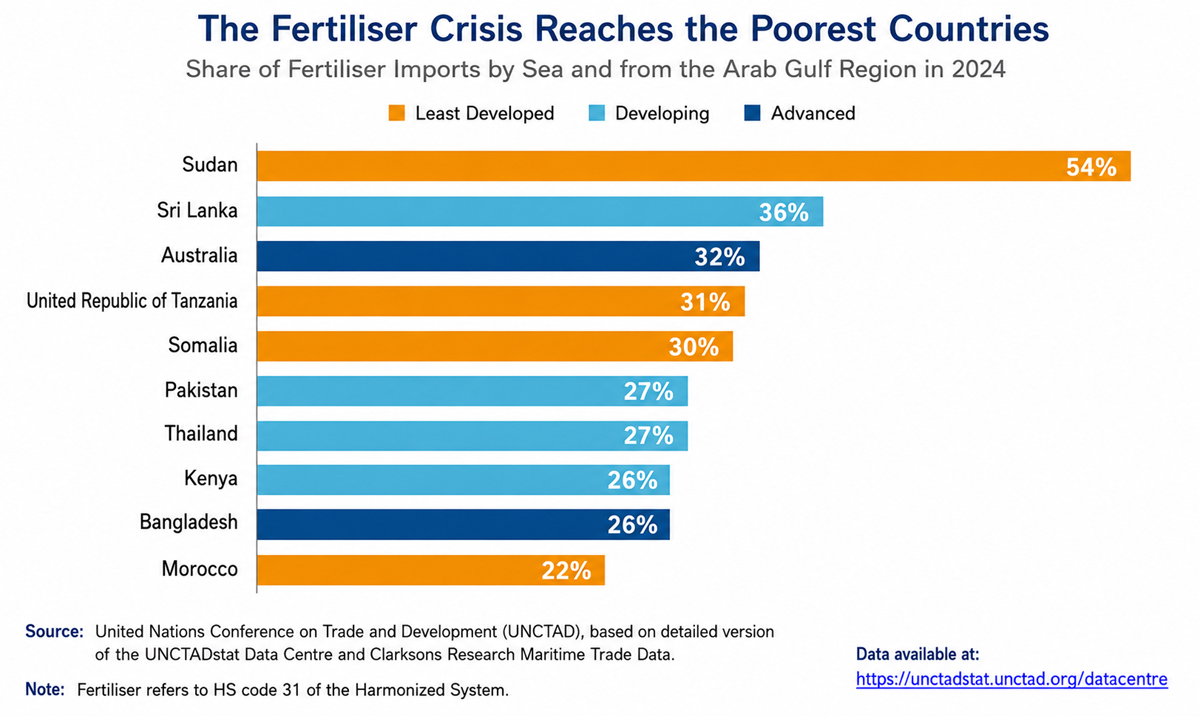
The risks are particularly acute for developing economies that depend heavily on fertiliser imports from the Gulf. Gulf-sourced fertilisers account for approximately:
54% of Sudan’s fertiliser imports
36% of Sri Lanka’s
31% of Tanzania’s
30% of Somalia’s
In these countries, rising prices are not merely an inflationary concern. They represent a direct threat to food security itself, with growing risks of rising poverty, social instability and economic distress.
4. Financial Markets and Macroeconomic Risks: The Crisis Spreads to Global Finance
As the American–Israeli war against Iran intensified and the Strait of Hormuz effectively became a zone of near-total naval blockade, the crisis gradually spread from energy markets into global financial markets. What began as an oil shock is increasingly evolving into a broader source of financial and economic uncertainty. Investors have started aggressively repricing risk across global markets. Sovereign-bond yields in many emerging economies have risen sharply, while risk spreads widened as geopolitical tensions and fears of slower global growth combined with persistent inflation unsettled investors. At the same time, markets witnessed a classic “flight to safety”, with large capital flows moving towards the US dollar, American Treasury bonds and gold, at the expense of riskier assets and emerging markets. Several currencies weakened significantly, while volatility across global financial markets increased markedly.
The situation is particularly dangerous because the current crisis arrives at a time when global interest rates remain elevated after years of aggressive monetary tightening by central banks attempting to contain inflation. As energy prices rise and supply chains weaken once again, markets increasingly fear a renewed inflationary wave, potentially forcing central banks—especially the US Federal Reserve—to keep interest rates higher for longer despite slowing economic growth. This creates an exceptionally fragile financial environment, particularly for heavily indebted developing economies, where rising borrowing costs and weakening currencies place mounting pressure on public finances and foreign-exchange reserves, increasing the risk of financial distress or sovereign-debt crises should the conflict persist.
5. The Economic Impact of Military Escalation on the Arab Region
According to estimates by the United Nations Development Programme (UNDP), the military escalation in the Middle East extends far beyond disruptions to trade and energy markets. It is triggering a broad economic and social shock across the Arab world. UNDP projections suggest that regional economies could suffer losses ranging from 3.7% to 6% of GDP, equivalent to approximately $120bn–194bn in economic losses—figures exceeding the region’s total economic growth achieved during 2025. Unemployment is expected to rise by roughly four percentage points, with around 3.6m jobs potentially lost and as many as 4m additional people falling below the poverty line.
These estimates reveal the structural fragility of many Arab economies, where even a relatively short geopolitical shock can produce long-lasting consequences for growth, employment and social stability. The effects are also highly uneven across the region. Gulf economies and Levant countries are expected to bear the largest losses due to their exposure to trade disruptions and volatile energy markets, while the sharpest increases in poverty are projected to occur in least-developed Arab economies and parts of the eastern Mediterranean region.
The crisis therefore represents more than a temporary economic setback. It marks a potential turning point in the region’s development trajectory, underscoring the urgent need to rethink existing growth models, accelerate economic diversification and strengthen regional production and trade networks in order to reduce vulnerability to external shocks, particularly those linked to energy markets and global supply chains.

China: Between Vulnerability and Strategic Opportunity
Although China is among the economies most exposed to global energy disruptions because of its heavy dependence on imported oil and gas, the current crisis may simultaneously create important geoeconomic opportunities for Beijing. China possesses vast strategic petroleum reserves and maintains close energy ties with both Russia and Iran, giving it greater relative capacity to secure part of its energy needs compared with several Asian and Western economies. Moreover, rising production and energy costs in Western economies could improve the competitiveness of Chinese industries, particularly in electronics, electric vehicles, infrastructure and lower-cost industrial goods.
At the same time, the crisis may encourage many Asian and developing economies—especially in Southeast Asia, including Indonesia, Malaysia and Thailand—to deepen their economic and trade dependence on China as a lower-cost supplier capable of providing financing, industrial goods and energy access. The disruption may also accelerate the use of the Chinese yuan in regional trade and energy transactions, gradually strengthening Beijing’s financial influence. Nevertheless, these potential gains remain conditional on avoiding a severe global recession, since weaker demand in the United States and Europe would ultimately weigh on Chinese exports and industrial growth.
Conclusion
Viewed in its broader context, the Strait of Hormuz crisis is not merely a temporary disruption in energy markets. It represents a complex structural shock threatening to push the global economy into a more dangerous phase of persistent inflation and stagflationary risk. Simultaneous disruptions to oil supplies and rising transportation costs have created what economists would describe as a “double supply shock”, where prices rise across multiple sectors even as economic activity slows.
This combination of rising costs and weaker growth creates an exceptionally difficult environment for policymakers. Fighting inflation requires tighter monetary policy, yet tighter policy risks deepening the slowdown. Supporting growth, meanwhile, may fuel additional inflationary waves. If disruptions in strategic corridors such as Hormuz persist, today’s inflationary pressures could evolve from a temporary shock into a more durable global inflation regime capable of reshaping the world economy for years to come.
The crisis also arrives before the global economy has fully recovered from earlier shocks, including the pandemic and the war in Ukraine, increasing the risk of slipping into a stagflationary scenario marked by weak growth and rising prices—one of the most dangerous and difficult macroeconomic environments to manage.
More fundamentally, the crisis demonstrates that the global economic model built around maximum efficiency is no longer sufficient to guarantee resilience. Recent shocks have shown that the most efficient systems are not necessarily the most durable, and that excessive dependence on concentrated trade routes or supply chains can rapidly become a strategic vulnerability. As a result, governments and businesses alike are increasingly being forced to rebalance efficiency with resilience, openness with strategic protection and globalisation with economic security.
Europe now faces mounting industrial pressure from rising energy costs. The United States confronts growing imported inflation as higher production costs in Asia feed into consumer prices. China, despite its vulnerabilities, may attempt to transform the disruption into an opportunity to expand its geopolitical and economic influence. Meanwhile, the Arab world remains both central to the crisis and among its most exposed regions.
For oil-exporting Arab economies, higher energy prices provide temporary gains, yet these are offset by export disruptions, rising insurance and shipping costs and growing geopolitical instability. Energy-importing Arab economies face even harsher pressures through inflation, food insecurity and deteriorating fiscal conditions. Estimates suggest the Arab region could suffer losses ranging from 3.7% to 6% of GDP—equivalent to roughly $120bn–194bn—alongside the loss of around 3.6m jobs and up to 4m additional people falling into poverty.
Ultimately, the Hormuz crisis is not simply an oil crisis. It is a test of the resilience of the global economic system itself and a reminder that geopolitical instability in an interconnected world eventually affects everyone.
Recommendations
The Hormuz crisis makes clear that the world has entered a new era in which geopolitical shocks are no longer isolated regional events but systemic global risks capable of destabilising the entire international economy. This underlines the urgent need for a more balanced and cooperative global economic order based on partnership between advanced and developing economies alike, and on respect for the economic interests of all peoples rather than the deepening of geopolitical rivalries. The current crisis has shown how disruptions in energy, trade and food systems in one region can rapidly evolve into global inflation, financial instability and slowing growth across every continent. Strengthening international cooperation in energy security, food supply chains, trade, investment and technology therefore becomes essential not only for economic stability but for sustainable global development itself.
The crisis also demonstrates that prolonged wars and geopolitical confrontations do not merely punish poorer or more fragile nations. Their effects inevitably spread to major economies, financial markets and living standards around the world. Inflation, rising food and energy prices and slowing growth recognise no borders. Any prolonged breakdown in global stability ultimately weakens all economies regardless of their relative wealth or military power. This is why diplomacy, dialogue and mutual respect among nations must once again become central pillars of international economic stability. The world today requires not only crisis management, but a broader vision based on cooperation, shared development and reducing inequalities between rich and poor countries. Lasting stability cannot emerge in a world increasingly shaped by fragmentation, conflict and widening economic divides.
This article draws primarily on:
- “Disruptions in the Strait of Hormuz and Their Implications for Global Trade and Development”, published by the United Nations Conference on Trade and Development (UNCTAD), 10 March 2026.
- “Military Escalation in the Middle East Could Erase More Than a Year of Economic Growth in the Arab Region”, United Nations Development Programme (UNDP), 31 March 2026.
References
• International Energy Agency (IEA) – Global Oil Market Reports 2026
• International Monetary Fund (IMF) – World Economic Outlook 2026
• US Energy Information Administration (EIA) – Short-Term Energy Outlook
• Food and Agriculture Organisation (FAO) – Global Food Price Indices
• World Bank – Commodity Markets Outlook 2026
• The Economist – Analysis of energy markets and global inflation
• Reuters – Energy, shipping and inflation coverage, 2026
- Details
- Written by: Admin Admin
- Category: Magazine
- Hits: 412
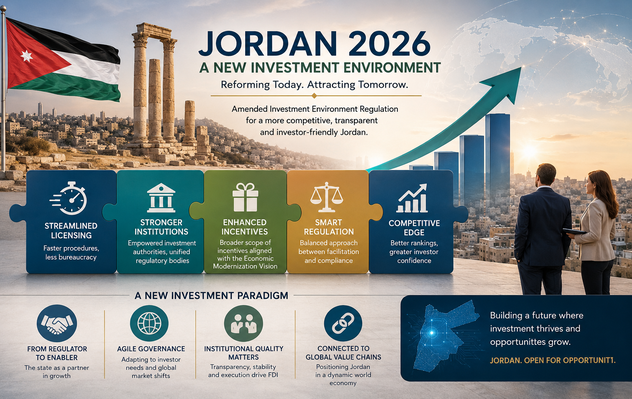
In a fast-paced regional race to attract foreign direct investment (FDI), the Jordanian government has approved an amended regulation for the Investment Environment Law for the year 2026.
This move aims to recalibrate the governing legislative framework, streamline administrative procedures, and enhance the economy's competitive edge.
The amendment comes as part of a broader push to optimize the business climate and ease investor market entry, particularly in light of global economic pressures and dampened investment appetite across several emerging markets.
According to official announcements, the amended regulation focuses on restructuring the investor-state dynamic by cutting bureaucratic red tape, unifying regulatory bodies, and expanding the scope of investment incentives in alignment with the country's Economic Modernization Vision.
The decision also signals a clear bid to improve Jordan’s standing in international indices related to the ease of doing business and investment attractiveness—metrics that have become critical milestones for global capital allocation.
This strategic direction cannot be isolated from wider shifts across the region, where numerous countries, including the Gulf states, are aggressively re-engineering their investment landscapes by modernizing legal frameworks and relaxing administrative barriers.
Saudi Arabia, for instance, has recently accelerated the adoption of regulatory reforms spanning data protection, corporate law updates, and the advancement of the e-commerce ecosystem.
This underscores a regional paradigm shift away from traditional administrative economies toward highly agile structures that are receptive to global capital (Alashwali & Alhuzali, 2026).
In Jordan's case, the revised framework targets reducing the processing time for licensing, expanding the mandates of investment authorities, and introducing novel regulatory mechanisms designed to strike a balance between business facilitation and regulatory compliance.
This methodology reflects a shift in the philosophy of economic governance; the goal is no longer merely to enforce rules, but to redesign them so they serve as catalysts for growth rather than operational hurdles.
From a broader analytical perspective, this amendment can be interpreted as a maneuver within a regional "regulatory competition." Countries are no longer competing solely via tax rates or direct fiscal perks, but through the quality of their legislative frameworks, decision-making velocity, and institutional efficiency.
This transition aligns with recent economic literature highlighting the role of smart regulations in lowering transaction costs and smoothing cross-border investment flows, particularly in environments historically bogged down by administrative fragmentation or overlapping jurisdictions (World Bank, 2025).
Furthermore, deploying concepts like streamlined licensing and broadened incentives points toward what can be termed agile investment governance—transitioning from a rigid, oversight-heavy model to one that adapts to investor needs.
Such structural overhauls typically aim to elevate a nation's position in global competitiveness scorecards, such as the IMD rankings or ease of doing business metrics, which global investment funds and international financial institutions rely upon heavily when vetting emerging markets.
Conversely, analyzing parallel case studies in the region indicates that the success of these reforms hinges less on statutory texts and far more on the executive capacity of government institutions and the medium-term stability of the regulatory landscape.
Many emerging economies have successfully modernized their statutes on paper, only to stumble during practical implementation, thereby creating a disconnect between de jure reform and de facto reality.
Within this context, linking national investment strategies to shifting global value chains becomes paramount. International investors have grown exceptionally sensitive to institutional stability, administrative transparency, and swift access to decision-makers, often prioritizing these over conventional financial incentives alone.
Reports by the OECD confirm that institutional quality has become a decisive factor, carrying as much weight as corporate tax rates in dictating FDI inflows (OECD, 2025).
Consequently, Jordan's updated regulation is a milestone in a larger trajectory that redefines the relationship between the state and the market.
The state is shifting from a traditional regulator into an "investment enabler"—a trend that now dominates economic policymaking across several developing and middle-income economies.
Amid this transformation, the core challenge remains whether these frameworks can deliver a tangible, on-the-ground impact rather than just a polished legislative upgrade.
Today's global investor does not merely read the statutes; they assess their efficacy through the speed of execution, clarity of protocols, and the long-term predictability of the regulatory environment.
References
- Alashwali, E., & Alhuzali, A. (2026). One Year After the PDPL: A Glimpse into the E-Commerce World in Saudi Arabia. arXiv. https://arxiv.org/abs/2602.18616
- OECD. (2025). Economic Surveys and Investment Climate Reports. https://www.oecd.org/
- World Bank. (2025). Worldwide Governance Indicators / Regulatory Quality Reports. https://info.worldbank.org/governance/wgi/
- Jordan News / Government of Jordan. (2026). Cabinet approves amended investment environment regulation. https://www.almamlakatv.com/news/199592
- MENA Startup Funding – April 2026: A Digital Rebound Masking a More Conservative Capital Realignment
- Download Your FREE Copy of the Doing
- حالة الشركات الناشئة في الشرق الأوسط وشمال إفريقيا في شهر أبريل 2021
- سويسرا من أكبر المصدرين لمعدات فيروس كورونا (كوفيد19) القصة غير المروية عن الصناعات الدوائية السويسرية
About Us
Enjoy the power of entrepreneurs' platform offering comprehensive economic information on the Arab world and Switzerland, with databases on various economic issues, mainly Swiss-Arab trade statistics, a platform linking international entrepreneurs and decision makers. Become member and be part of international entrepreneurs' network, where business and pleasure meet.
Popular Items

Recent News



Contact Us
Please contact us :
Cogestra Laser SA
144, route du Mandement
1242 Satigny - Geneva
Switzerland